The New CPA Professional Program
The New CPA Professional Program is a bold and modern path to becoming a Chartered Professional Accountant — one that prepares you to lead in our economy. It blends essential technical excellence in accounting and a strong foundation in ethics with real-world experience and future-focused skills that evolve alongside the demands of a world redefined by AI.
Students will build a foundation of real-world experience to ensure they’re equipped to lead, solve, and make an impact from day one. It’s a launchpad to a dynamic career, equipping future CPAs for any industry, any challenge, and any possibility, no matter where markets, business or the world go.
The new CPA Professional Program will launch in January 2027. Specific admission requirements and how to register will be shared in 2026.

Competency Map 2.0
The new Competency Map 2.0 has reimagined the skills and competencies that will equip new CPAs for the future with a grounding in the critical knowledge, technical skills, and ethical mindset that the profession is already known for.
It is the foundation for the new CPA Professional Program. Familiarize yourself with the Competency Map 2.0 to understand what skills you will learn in the new CPA Professional Program.
CPA Professional Program
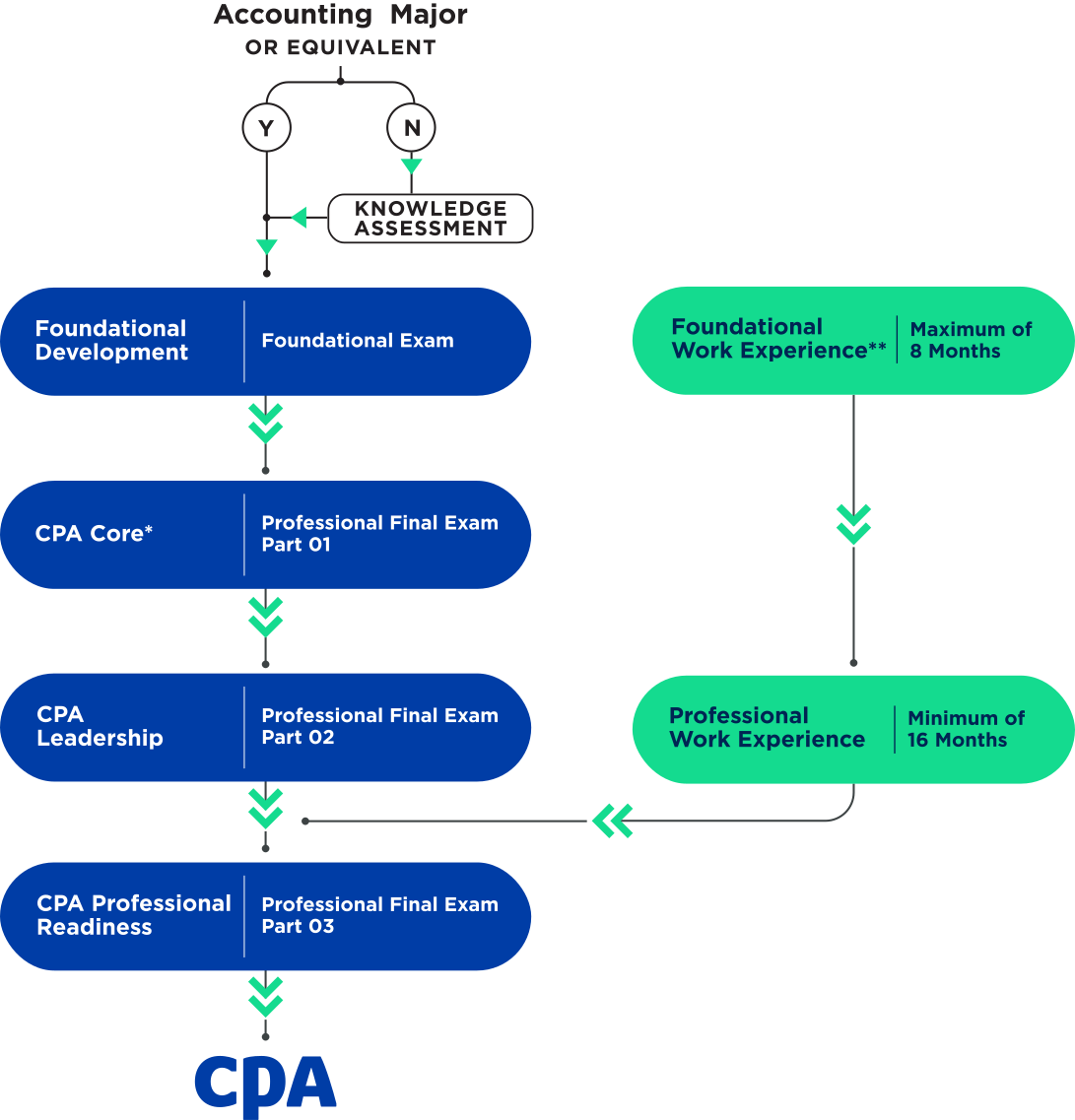
*Those seeking licensure must pass the Licensure version of CPA Core and pass the Licensure version of PFE 1.
**This work experience can be completed before the Foundational Development module.
Beginning the new CPA Professional Program
Foundational Development Module
CPA Core Module
CPA Leadership Module
Practical Experience
CPA Professional Readiness Module
Beginning the new CPA Professional Program
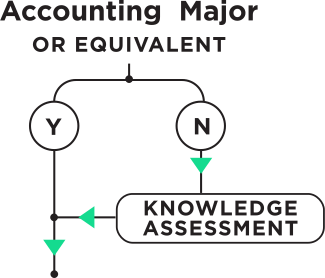
There are two pathways to enter the new CPA Professional Program, guided by your academic background.
Candidates who have successfully completed specific undergraduate courses which provide the required entry level knowledge to succeed in the program may be placed directly into the first education module, Foundational Development. Those courses are the following:
- Intermediate Financial Reporting 1
- Intermediate Financial Reporting 2
- Advanced Financial Reporting
- Corporate Finance
- Audit and Assurance
- Taxation
- Intermediate Management Accounting
You will also need to have completed eight other business courses of your choosing.
Candidates who have not completed those undergraduate courses, but meet the other admission requirements, will need to begin with a Knowledge Assessment which checks whether you have the entry level knowledge needed to succeed in the program.
Specific admission requirements and more details will be shared in 2026.
Foundational Development Module
Build the foundational technical and professional competencies you’ll rely on throughout your CPA career. This module strengthens the skills that support sound judgment, effective communication, and confident decision-making.
What You Will Learn:
- To integrate Specific Competency topic areas such as financial reporting, assurance and trust, analytics, sustainability and taxation into your decision-making process.
- How to apply Foundational Competencies like Sustainability and Economics, along with sub-foundational areas to broaden your perspective.
- Begin developing CPA Advanced Professional Competencies, with a focus on Decision Competencies.
- To apply an ethical mindset and professional skepticism when making decisions.
CPA Core Module
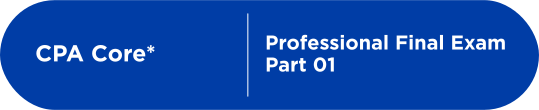
All CPAs need skills in assurance and financial reporting. This module helps you build the core knowledge and competencies you need to understand and work with financial statements and financial information. You'll also learn how financial data supports key activities in organizations, including collaborating with external auditors.
You will select one of two learning pathways in this module:
CPA Core – Common: this path strengthens your Specific Competencies in such areas as financial reporting, assurance and trust, big data and analytics and taxation.
CPA Core – Licensure: If you’re pursuing a career in public accounting, this module is for you. This pathway gives you the added depth in financial and non-financial reporting, assurance, taxation and data analytics to meet licensure requirements and gain flexibility for success across the profession.
CPA Leadership Module
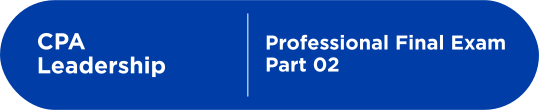
In this module, you’ll strengthen your critical thinking and sharpen your decision-making skills. You’ll learn how to assess what information is needed, understand the broader impact of decisions, and explore what goes beyond the numbers when advising an organization.
What You Will Learn:
- How to deepen your CPA Ethical Mindset and CPA Advanced Professional Competencies.
- How to focus on decision-making, critical thinking, and integrated problem-solving.
- Integration of all competencies across topics such as finance, assurance, management accounting, sustainability, and EDI through case-based learning.
Practical Experience
Apply your knowledge in real-world business environments, and gain the practical experience needed as a CPA.
There are two types of work experience needed, each with a specific time requirement for a total of 24 months of practical experience.
Foundational work experience: to demonstrate early-stage application of Advanced Professional Competencies. Foundational work experience is a maximum of eight months.
Professional work experience: to demonstrate Advanced decision-making and leadership skills. Professional work experience requires a work plan be approved by CPA Ontario before you begin and is a minimum of 16 months.
You must complete all of your practical experience requirements before enrolling in the final module, CPA Professional Readiness.

CPA Professional Readiness Module
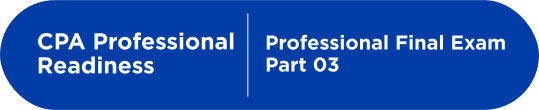
This is the final step to prepare you for application to CPA membership through an intensive, five-day in-person education experience culminating in the Professional Final Exam III.
What You Will Learn:
- How to refine your CPA Ethical Mindset and mastery of CPA Advanced Professional Competencies.
- How to apply the CPA Code of Professional Conduct in real-world scenarios.
- Use case-based learning to navigate working as a team and navigating emerging global issues.
Current students and the new CPA Professional Program
If you are a current student in the pre-certification program, keep your momentum going and stay on track to become a CPA.
If you can’t finish the current program, there is a transition plan to the new CPA Professional Program for those who are eligible. To learn more visit the transition page.
We are here to support you
Whether you're in the current program or transitioning to the new one, we’re committed to setting you up for success.
Visit the student support centre and if you have additional questions, contact us.